
The Future of Supply Chains Is Transparent: From Black Box to Glass Box
- Zofia Jozefkowicz

- Nov 4
- 3 min read
Updated: Nov 5
By: Zofia Józefkowicz

From Promises to Proof
For years, sustainability lived in the margins. There were hopeful promises, static labels, and fine print that few people read. That era produced too many unverified claims and too little operational change.
The market is moving on. What wins now is proof that anyone can check, and teams can act on.
When product data becomes visible and consistent, decisions speed up, risks surface earlier, and trust is earned rather than asserted.
What Is a Digital Product Passport (DPP)?
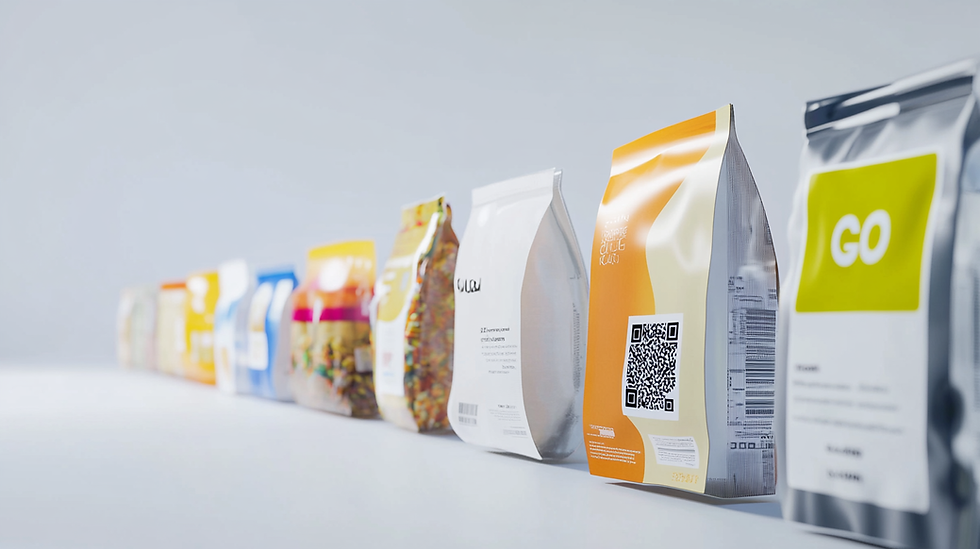
A Digital Product Passport (DPP) is a structured record linked to a physical item, accessible by QR code or NFC tag.
It carries:
Product identity
Origin and materials
Verification of evidence
Care and repair guidance
End-of-life options
As of October 2025, the EU’s Ecodesign for Sustainable Products Regulation (ESPR) is pushing adoption by pairing design expectations with shared product data that travels through the lifecycle.
The essential shift is from narrative to evidence. A passport becomes a single product truth that can be validated and updated as the item moves from production to use, service, resale, and recovery.
If you’re new to the concept, start with our primer:👉 What is a Digital Product Passport and Why It Matters.
Why This Matters to the Business
Audit and Compliance Readiness
Market surveillance and buyer due diligence are faster when claims rest on a common dataset rather than scattered spreadsheets.
Risk Reduction
Authenticity checks at point of sale or return reduce counterfeit exposure and fraudulent refunds.
New Revenue
Authenticated resale, extended warranties, subscription repair, and take-back credits become practical when data is consistent across partners.
Architecture Does the Heavy Lifting
A passport should reference source systems rather than duplicate them. Connect:
PLM for identifiers and specifications
ERP for bills of material and production lots
LCA tools for impact figures
This approach reduces mismatched versions and makes audits repeatable.
Make the data portable with open identifiers and APIs so the same fields can be read by service centers, resale platforms, and recyclers without re-keying.
Why This Matters to People and Society
For customers, clarity replaces guesswork. A scan reveals what the item is made of, how to care for it, and how to keep it in use longer.
Ownership becomes stewardship because repair becomes practical.
Society benefits when recyclers can plan material feedstock, they can anticipate incoming volumes and grades of material because standardized passport data aggregates what is available and where.
Public buyers can set cleaner criteria. Innovators can validate new materials earlier with real-world feedback.
What Transparency Looks Like in Practice
Same facts for everyone who scans: identity, verified materials, care, repair, and end-of-life routing are consistent across touchpoints.
Evidence attached to each claim: test reports, certificates, or audits are linked at the field level.
Change history: when a field changes, users can see when and why.
Usage analytics: you know which fields are most viewed and where customers or teams get stuck.
The Path Ahead
Define two outcomes. For example: reduce return fraud and shorten audit response time.
Choose a product family. Start with a manageable line where repair or resale already exists or is feasible.
Connect sources. Pull identifiers from PLM, bills of material from ERP, and impact figures from LCA through APIs. Avoid manual duplication.
Ship the scan experience. Place a clear QR on product and packaging. Make the landing simple. Track which fields customers and teams use most.
Extend upstream. Standardize evidence formats with suppliers. Set expectations for update frequency and verification.
Close the loop. Use analytics to simplify language, retire unused fields, and prioritize attributes that unlock service and resale.
The Horizon
Fewer mismatches between marketing claims and internal data
Faster responses to customer and auditor requests
Higher repair completion and authenticated resale rates
Better visibility for recyclers on grades and volumes entering the stream
The Takeaway
Supply chains are shifting from black box to glass box.
Brands that surface trustworthy, product-level data with consistency and low friction will set the pace for their sectors and shape the standards that follow.
The winners will not be the loudest. They will be the clearest.


Comments